

Big Paws - Big Dogs - Big Hearts

Food & Nutrition
Good Food, Happy Tails, & Full Bellies
Around here, mealtime is a pretty big deal! From our little four-legged vacuum cleaners to our big babies who swear they've never been fed a day in their lives, one thing's for certain—nobody at Mesquite Creek Kennels is missing a meal! 😂
We've put together this little corner of our website to share a peek inside our feeding bowls, some of our favorite products, and a few helpful tips we've picked up along the way.
So pull up a chair, grab a cup of sweet tea, and let's talk about what's on the menu!
Because around here, good food and happy dogs just go hand in paw! 🐾
A Healthy Start Begins in the Bowl 🐾
At Mesquite Creek Kennels, we believe proper nutrition is one of the most important foundations for raising happy, healthy dogs. From the tiniest Miniature Dachshund to the largest Presa Canario, what goes into their bowls plays an important role in their growth, development, energy, and overall well-being.
We take feeding seriously because we understand that puppies aren't simply miniature versions of adult dogs. Their nutritional needs are different, and those needs continue to change as they grow.
Our approach focuses on quality nutrition, consistent feeding schedules, appropriate portions, and maintaining a healthy body condition. We don't believe bigger is always better, especially when it comes to growing puppies. Our goal is to support steady, healthy development rather than encourage unnecessary weight gain.
Throughout this page, we're sharing the foods we use, the feeding routines we follow, and the recommendations we regularly give our puppy families.
Because a healthy future starts with the little things we do every single day—including what's in their bowl.
What We Feed at Mesquite Creek Kennels
We believe in feeding a complete, balanced diet appropriate for each dog's size, age, and developmental needs.
Our Presa Canarios:
-
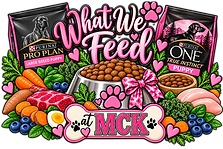
For our growing Presa Canarios, we feed Purina One Large Breed Puppy Formula, which is formulated to support the nutritional demands of developing large-breed dogs.
-
Our program generally continues large-breed puppy nutrition until approximately 2 years of age, when we transition our dogs to Purina ONE Large Breed Adult Formula.
-
Presa Canarios are a slow-maturing breed, and we place a strong emphasis on supporting controlled growth, appropriate body condition, and healthy skeletal development.
-
Our Recommendation: Do not rush to transition your growing Presa to adult food simply because they've reached their first birthday. We prefer to keep our dogs on an appropriate large-breed growth formula while they're developing, with the transition guided by their individual growth and veterinary recommendations.
Our Miniature Dachshunds:
-
Our Miniature Dachshunds are raised on Purina ONE true instinct puppy formula.
-
Within our program, we generally maintain a puppy-focused feeding routine until approximately 2 years of age, then transition to an appropriate adult formula.
-
Because Dachshunds are a much smaller breed, their growth rate and nutritional requirements differ considerably from those of our Presas. We encourage families to work with their veterinarian to determine the appropriate transition age and portion sizes for their individual dog.
Our Recommendation: Whatever food you ultimately choose, make sure it is complete and balanced for your puppy's current life stage. Consistency and proper nutrition matter far more than constantly changing brands or chasing the latest feeding trends.

Transitioning to a New Food
Bringing home a new puppy is already a major adjustment, and suddenly changing their food can add unnecessary digestive stress.
We strongly encourage families to continue feeding the same food their puppy has been receiving at Mesquite Creek, at least during the initial transition home.
If you decide to change brands or formulas, we recommend doing so gradually over approximately 7–10 days.
Transition Period Current Food New Food
Days 1– 3 75% 25%
Days 4– 6 50% 50%
Days 7–9 25% 75%
Day 10 0% 100%
This is a general guide. Some puppies may need a slower transition, particularly if they have sensitive stomachs.
Watch for changes in stool consistency, appetite, or overall behavior. Persistent vomiting, diarrhea, lethargy, or refusal to eat should be discussed with your veterinarian promptly.
MCK Tip: Your puppy is already adjusting to a new home, new people, and a new routine. Keeping their food consistent is one simple way to make that transition easier.
Feeding Schedules & Portions


At Mesquite Creek Kennels, we believe consistency is incredibly important when establishing healthy feeding habits.
Our young puppies are generally fed three times daily, gradually transitioning to two meals per day as they mature and their individual needs allow.
Our adult Presa Canarios follow a consistent feeding schedule:
-
Morning Feeding: 7:00 AM
-
Evening Feeding: 4:00 PM
We encourage our families to establish a routine that works for their household and remain as consistent as possible.
The amount your dog needs will depend on their age, weight, activity level, body condition, and the calorie content of their food. We recommend starting with the manufacturer's feeding guidelines and adjusting with veterinary guidance.
MCK Tip: Measure your dog's food rather than guessing. A healthy weight is important for every dog, but particularly for large breeds with developing joints and Dachshunds whose backs can be affected by excess weight.
Always provide fresh, clean drinking water.
Nutrition for Growing Bodies

Not all puppies grow at the same rate, and their nutritional needs should reflect that.
Presa Canarios: Large-breed puppies require careful attention to energy intake and the balance of essential minerals, particularly calcium and phosphorus. Rapid weight gain and excess calories can place unnecessary stress on developing bodies. We prioritize controlled growth, appropriate large-breed nutrition, and maintaining a lean, healthy condition.
Miniature Dachshunds: Smaller puppies also require complete and balanced growth nutrition, but their calorie needs and development timelines differ. Maintaining an appropriate weight from puppyhood onward is especially important for supporting their long-term mobility and spinal health.
Regardless of breed, our philosophy remains the same: Feed for healthy development, not maximum size.
Treats, Toppers & Healthy Extras

We love spoiling our dogs just as much as anyone, but we also believe that treats should be given thoughtfully and in moderation.
Treats can be wonderful tools for training, rewarding good behavior, and providing enrichment. However, excessive treats and unnecessary extras can contribute to unwanted weight gain and throw off the balance of an otherwise healthy diet.
We generally recommend limiting treats to no more than approximately 10% of daily calories, with the majority of nutrition coming from a complete and balanced diet.
We also discourage feeding table scraps. Beyond contributing unnecessary calories, many human foods contain ingredients that are unsafe for dogs.
Our Recommendation: A healthy dog doesn't need to be overweight to be loved and well cared for. Maintaining a lean, appropriate body condition is one of the best long-term investments you can make in your dog's well-being.
Supplements & Our Recommendations
Within our program, we use and recommend several nutritional supplements, including:
-
NuVet Plus
-
NuVet Joint
-
SureGrow
Our supplement routines may begin as early as 8 weeks of age, depending on the individual puppy and product.
We believe supplementation should be approached thoughtfully. Not every dog needs every supplement, and adding vitamins or minerals to an already balanced diet can sometimes create nutritional imbalances.
This is especially important for growing large-breed puppies, whose calcium and phosphorus intake must remain appropriately balanced.
We encourage families to review all supplements with their veterinarian before beginning them, verify that each product is appropriate for their puppy's age and size, and follow product-specific directions.
Our Recommendation: Supplements should complement an appropriate diet—not replace one.

Foods & Feeding Habits to Avoid
Some of the most common feeding mistakes are also the easiest to prevent.
We encourage our families to avoid:
-
Feeding excessive table scraps
-
Overfeeding or allowing unnecessary weight gain
-
Making abrupt food changes
-
Giving too many treats
-
Adding vitamins or minerals without confirming they are appropriate
-
Feeding cooked bones or other unsafe chew items
-
Allowing access to toxic foods such as chocolate, grapes, raisins, onions, garlic, and products containing xylitol
A Note About Raw Feeding
We understand that some families prefer raw feeding, and we respect that owners may explore different approaches to nutrition.
Our biggest concern is ensuring that growing puppies receive a complete and properly balanced diet.
If you choose to incorporate raw food, we recommend consulting a veterinarian or board-certified veterinary nutritionist to make sure your puppy's nutritional needs are being met.
We also encourage families to retain an appropriate complete-and-balanced puppy food as part of their feeding plan when it fits their nutritionist's recommendations. Simply adding kibble to an unbalanced raw diet does not automatically make the overall diet nutritionally complete.
Raw animal products can carry harmful bacteria, so safe food handling and awareness of the risks to both pets and people are especially important.
Our Recommendation: Whether you feed kibble, a professionally formulated fresh diet, or another approach, nutritional balance and safety should always come first.
A Little Note From MCK 💗
Feeding your puppy doesn't have to be complicated, and it certainly doesn't have to become a competition over who buys the most expensive food or the fanciest supplements.
What matters most is that you're providing consistent, appropriate nutrition, paying attention to your dog's individual needs, and making informed decisions as they grow.
We've spent years raising, caring for, and learning from our dogs, and the feeding recommendations we share come from the routines we've established within our own program.
But every puppy is an individual, and we're always going to encourage you to work closely with your veterinarian when making decisions about nutrition, growth, and supplements.
And remember, if you ever have questions about what your MCK puppy was eating, their feeding routine, or how to make a transition, we're always happy to help.
From our family to yours—here's to healthy beginnings, full bellies, and many wonderful years together! 🐾


Nourish

Where healthy beginnings start.
Nurture

Raised with Love, Guided by Purpose.
Thrive
